










PERFORMANCE TAKES MANY FORMS
Following the birth of her second child, Jess Learmonth is entering a new chapter as both a mother and an athlete.
Her second pregnancy was not about recreating the training she completed during her first. It was about responding to a different body, different circumstances and everything she had learned from returning to elite racing after the birth of her son, Fred.
“The second pregnancy has felt a lot different, not so much physically, but more logistically. I’ve now got a two-year-old, and we’ve had a lot of life things happening, like moving house, so it’s been much harder to get training done when you’re looking after a child all day.”
Rather than seeing those differences as a loss of performance, Jess approached them with greater confidence. She had already experienced pregnancy, birth and the process of rebuilding fitness. This time, she knew that a changing training load did not remove the athlete.
Trusting the body
During her first pregnancy, Jess maintained a high training volume. She felt physically comfortable, continued running and cycling, and had access to extensive medical, strength and nutrition support.
The second time was less consistent. Fatigue, hip issues, family life and an injury that kept her away from running for around six weeks all affected what training looked like. But experience had changed her response.
“This time I’ve learned to trust my body and have real confidence in it. The first time, there hadn’t been that many athletes doing it, and not many women were talking about doing a lot of sport through pregnancy. I felt confident, but I still wasn’t completely sure.”
With one successful return behind her, she no longer felt the same pressure to protect every part of her fitness.
“I’m not stressed about coming back. I haven’t been in the pool for quite a long time and that doesn’t worry me. In my first pregnancy, I was probably too keen to keep training because I was worried about the return. This time, I know it might take a little longer, but I also know I’ll get there.”

Allowing training to evolve
Running, cycling and strength each remained part of Jess’ pregnancy, but their roles changed as her body did.
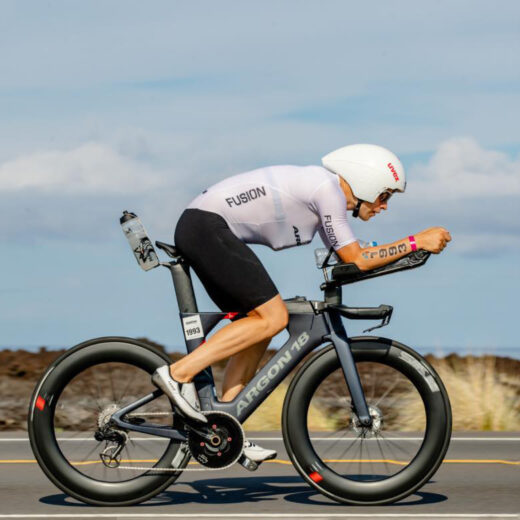
Cycling proved particularly adaptable. At around 30 weeks, she moved away from the road and onto local trails, where she felt more in control. Indoor sessions offered another way to keep riding as her position, comfort and confidence changed.
“Riding off-road gives me confidence because I feel more in control of what I’m doing. Being able to keep getting outside is really positive. It’s great for my mental health and lets me enjoy the summer as well.”
Running required a different response. A fall during pregnancy led to an issue with her SI joint and around six weeks without running. She focused on strengthening her pelvis and returned gradually when she felt able.
It was not a linear process. A run could feel good one day and require walking the next. Instead of treating those fluctuations as setbacks, Jess accepted them as part of training in a changing body.
What the first return taught her
Following Fred’s birth, Jess rebuilt her training in stages. She returned to swimming and cycling once she had healed and felt comfortable, while deliberately waiting three months before running.
She used that time to focus on her pelvic floor, hips, trunk and general strength. When running returned, she gradually increased the load rather than using the first session as a test.
“I had confidence that it wouldn’t affect my comeback. I’ve had enough injuries to know that having three months off running isn’t going to affect things that much.”
Her aerobic fitness returned faster than she had expected. Within a few weeks of training, she began to feel like herself again.
The experience also changed how she understood the amount of work required to compete at the highest level.
“One of the biggest takeaways from coming back after Fred was realising that maybe I had simply done too much before. I was getting away with doing much less and still performing. That was probably the most surprising thing.”
Performance was no longer defined by completing the maximum possible training. Precision, recovery and the ability to respond to changing circumstances became equally important.
Strength beyond the comeback
Jess’ first return also showed her that strength work could not be treated as a temporary phase.
She initially prioritised rebuilding her trunk, hips, pelvic floor and calves. Once she felt strong enough, that work became less consistent and recurring calf issues followed.
“I probably neglected it once I thought I was strong enough, and then the issues started to recur. I’d also changed mechanically in how I ran after childbirth, and I was a bit heavier, so I think that contributed.”
The lesson was not simply to regain strength after birth, but to continue maintaining it for as long as she wanted to train and race.
Her body had changed. The work needed to change with it.

Recovery is part of performance
The physical training was only part of Jess’ first return. She was also caring for a newborn, breastfeeding and sleeping less while attempting to rebuild fitness.
Looking back, she recognised that she did not always give her own nutrition and recovery enough attention.
“With a new child and a lack of sleep, I don’t think I ate enough, and I definitely noticed a difference in my mental health during that period. I don’t think I prioritised myself enough.”
This time, recovery will not wait until structured training resumes. Eating, hydration, sleep and support are already part of the process.
Jess compares the physical demands of birth with completing a major race. Both require time and energy to recover from, regardless of how quickly the next training session appears on the schedule.
Motherhood changed the logistics
The greatest change to Jess’ sporting potential was not necessarily physical. It was practical.
Training and racing as a mother required childcare, flexible schedules and support from her husband, John, as well as their wider family and friends. Travel could no longer be planned around the athlete alone.
“The real difference is logistical. You have someone else to look after, so you need someone else to care for your child while you train or race.”
It also made Jess more accepting of the parts of preparation she could not control. A child might not sleep. A session might disappear from the schedule. A race could begin after a night of almost no rest.
Before motherhood, those disruptions might have affected her confidence. Now, she is more willing to accept the circumstances and see what she can do within them.
“Motherhood makes you more patient in general because you can’t plan everything. I’m much more laid-back about missing sessions now.”
That patience did not reduce her ambition. Her return showed her that doing less training did not automatically mean performing at a lower level.

A new chapter
Jess has now experienced pregnancy and birth twice, but there is no fixed plan for what must happen next.
The lessons from her first return remain, but they do not create a deadline for the second. Recovery and family come first. Training will return in the form and at the pace that feel right for her.
For athletes considering motherhood, Jess hopes that more visible examples and better support can reduce the fear that starting a family must limit their sporting potential.
“I hear this all the time, athletes worrying about having children and sometimes leaving it until later in their careers. It makes me a bit sad, because physically I don’t think it has to affect your potential at all if you have the right support network behind you. It’s more than doable.”
For Jess, motherhood has not replaced the athlete. It has expanded her understanding of performance, patience and what the body can do.
This article reflects Jess Learmonth’s personal experience and is not intended as medical guidance. Pregnancy and postpartum recovery are individual and should be approached with appropriate professional support.
Photos: Ryan Sosna Bowd